Voluntourism – Picnic Island weed control 2021-25
In 2008 North Barker undertook a natural values assessment for the accommodation facility at Picnic Island. Back then, the only built infrastructure was a tiny shed. The island, which is almost entirely a seabird colony (little penguin and short-tailed shearwater), was characterised by various coastal vegetation communities within the seabird rookery complex, including halophytic herbland and coastal grassland; amongst the natives was a localised infestation of mirror bush (Coprosma repens), which was documented at the time as “scattered bushes”.
Mirror bush or taupata to those in New Zealand where it is native, is a highly invasive coastal weed that has a devastating impact on coastal bird colonies through alteration of habitats and the creation of impenetrable barriers to movement.
For the next 12 years, mirror bush proliferated across the island, forming large and dense infestations on the eastern slope in particular, but also gaining a toehold in every nook and cranny possible. Despite gallant attempts by the landowner to cut back bushes where they swamped the walking path or buildings, the mirror bush from humble beginnings spread to occupy more than 50% of the island. The tenacious plants also regrew after being cut back and, to make things worse, material left on the ground regenerated by sending out roots from discarded branches. Enter North Barker…
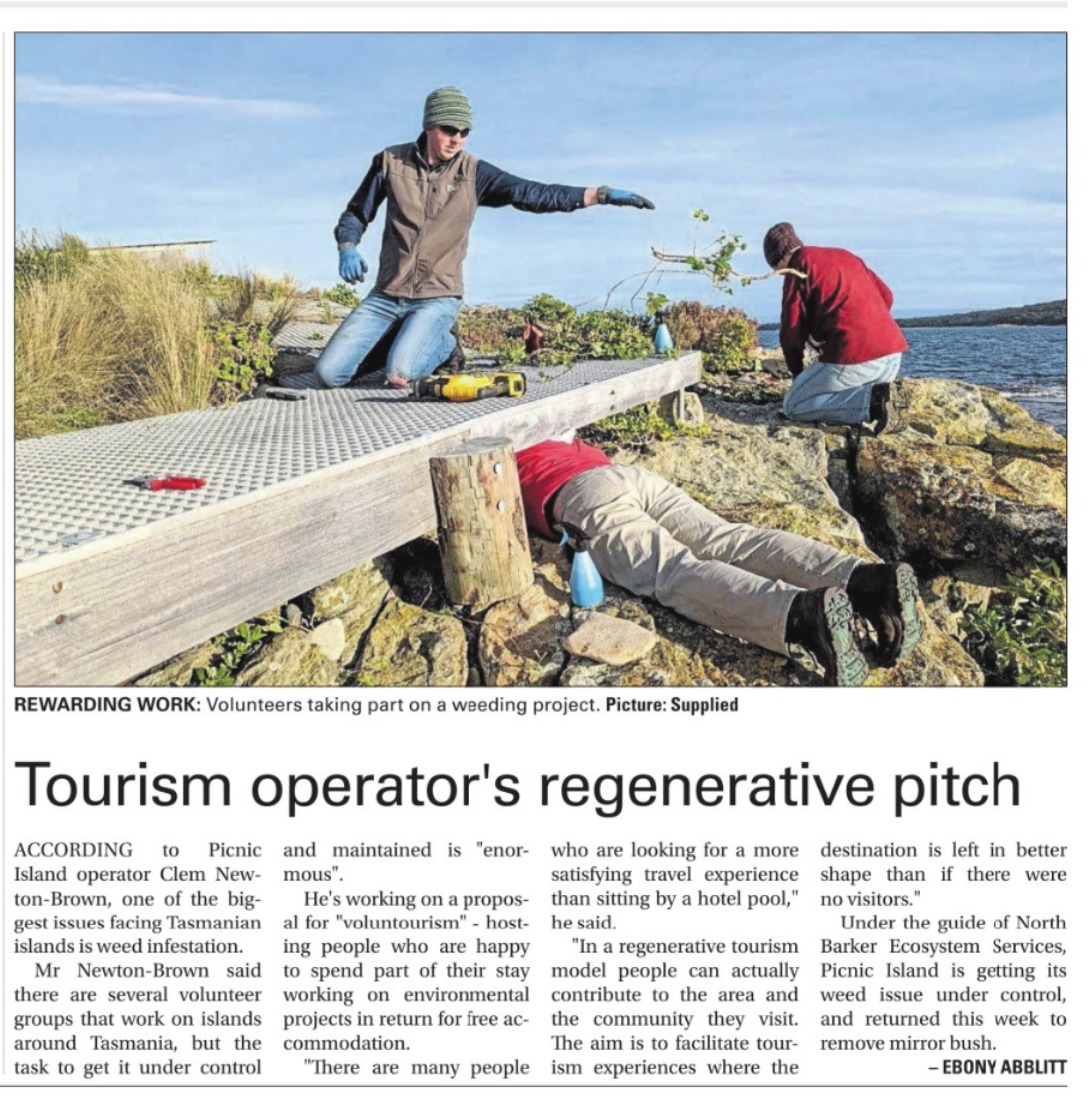
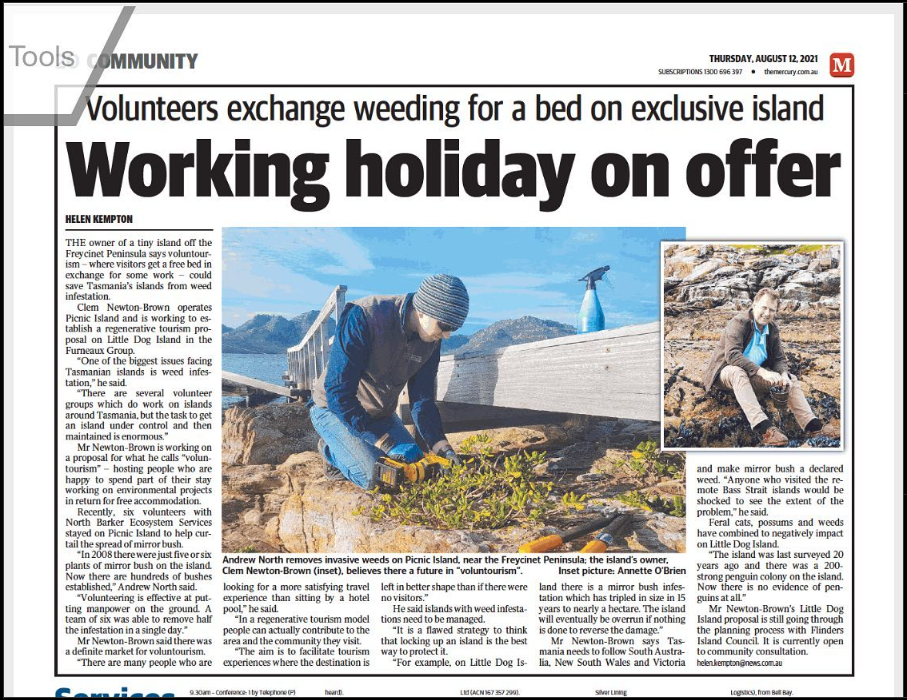
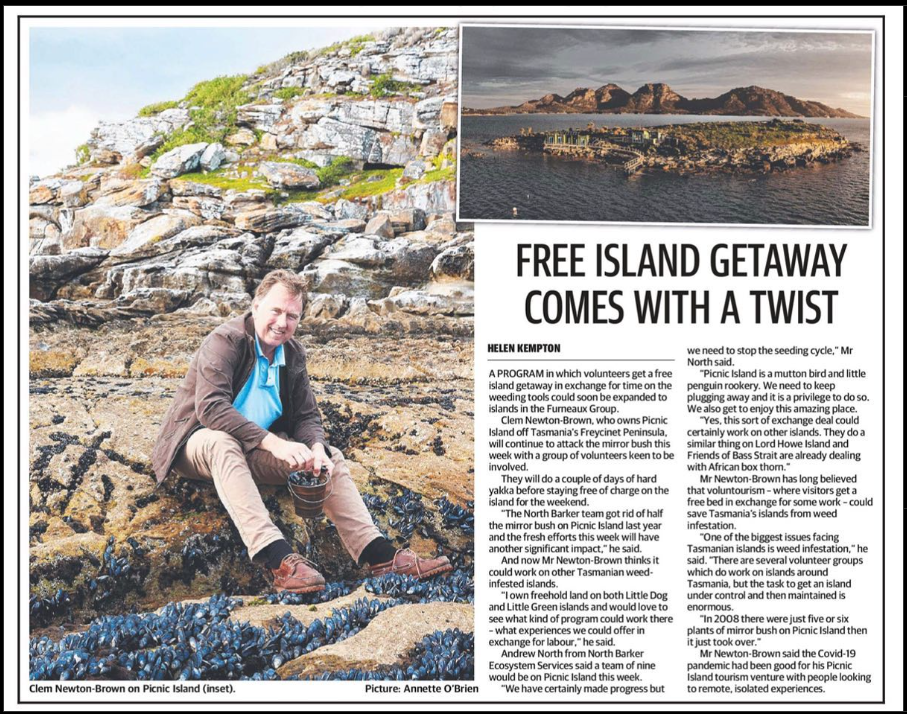
Since 2021 our team led by Andy North has adopted the island and taken on weed control as a voluntary team building initiative, with annual visits timed for when the migratory shearwater are not present to avoid impacts while they are in their burrows. Finishing a full sweep of primary control took 4 years, however the results have been fantastic and the task of follow-up treatments is much easier than early years, aided by good rates of knockdown using cut and paste on larger plants, and significant rates of recolonisation of bare soil by the native scrambling succulents. Ongoing maintenance control will be necessary for many years and potentially forever, as the mirror bush can recolonise from bird dispersed seeds from adjacent Coles Bay. We’re proud however for the time being to have restored the island habitat for the native seabirds and highly recommend a visit to the island during your next holiday – make sure to keep an eye out for mirror bush when you are there!