Ramsar significant impact assessments
As part of the controlled action pathway under the Commonwealth Environment Protection and Biodiversity Conservation Act 1999 (EPBCA), one of our current projects in northeast Tasmania is required to investigate the potential for significant impacts to nearby Ramsar sites as matters of national environmental significance.
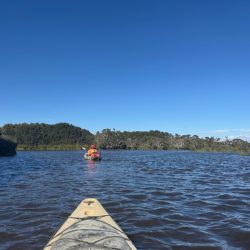
As such, between late 2024 and early 2025, two of Tasmania’s internationally recognised Ramsar wetlands — the Flood Plain Lower Ringarooma River Ramsar Site and the Little Waterhouse Lake Ramsar Site — were the focus of detailed natural values investigations by North Barker.
We investigated the unique terrestrial, aquatic and aerial landscapes of these protected wetlands, focusing on contributing to the existing natural values knowledge base and cross-referencing all findings with potential impacts from the adjacent proposed development. The following were targeted within the Ramsar sites:
- Hydrology
- Geomorphology
- Water quality
- Vegetation
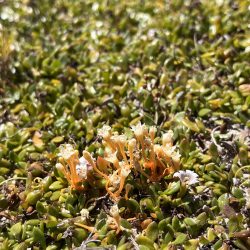
- Flora (terrestrial and aquatic)
- Fauna (including migratory birds and their flyways)
Understanding the terrestrial and aquatic natural values present in Ramsar sites is critical to identifying potential risks and ensuring that any future development nearby avoids and minimises harm to these sensitive areas – as well as contributing knowledge for improved management of the sites.
Both sites support diverse species, vegetation and habitats, many of which are rare or threatened, making them high priorities for conservation planning and targeted management. Our surveys added some new threatened species not previously known within the Ramsar sites, such as Cuscuta tasmanica (golden dodder).
The information gathered on vegetation communities, bird life, aquatic habitats, and other ecological features, provides a valuable baseline for long-term monitoring. Protecting these sites is not only about conserving their biodiversity, but also safeguarding the vital ecosystem services they provide. Through careful environmental impact assessment and ongoing ecological monitoring, the Flood Plain Lower Ringarooma River and Little Waterhouse Lake Ramsar sites can continue to be recognised as living examples of Tasmania’s natural heritage and remain resilient within a multiuse landscape.