Striped marsh frog surveys and assessments
The striped marsh frog (Limnodynastes peronii) is one of the rarest and most restricted frogs in Tasmania, only being found along the north coast, representing the southern limit to the species’ range. Though more widespread and common on mainland Australia, Tasmania’s island counterpart is listed as endangered under the Threatened Species Protection Act 1995. Like many frog species, it is highly sensitive to changes in the environment, with threats such as habitat loss, water quality decline, and the spread of chytrid fungus.
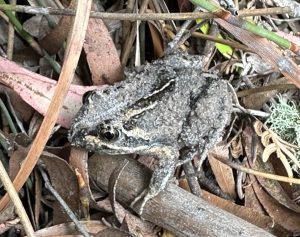
Surveying for striped marsh frogs amongst other threatened fauna is a critical part of our natural values assessment process in the north of the state. Our surveys help identify where the species is present, inform avoidance and mitigation, and ensure developments comply with environmental legislation.
To target frog species, our team use traditional and innovative methods to capture a suite of data and cut down on false negatives – we also optimise detection rates by targeting the breeding season when the frogs are most actively calling, both during the day and at night. Our methods include active on-ground searches, listening for calls, call-back surveys, eDNA, and bioacoustics. In particular we are advancing use of the latter, deploying passive acoustic monitoring devices for weeks and months at time, dramatically increasing survey effort compared to traditional methods. Analysis of the recordings is undertaken in-house by expert and trained acoustic specialists, to identify detections of the striped marsh frog and its distinctive “tuk” and “whuck” calls – can you pick them in the recording below?